

What is “football”? It’s a strangely controversial question. With the FIFA World Cup going on—hosted in North America, no less— the question is more in focus. Many insist that the sport FIFA oversees is properly called “football” and nothing else. Yet many nations—especially those with other sports they call “football”—have another name for it: “soccer.” So which is it?
The correct name for this sport is, in fact, “Association Football.” This name comes from the association that codified the rules of the game in 1863 (which were quite different from its modern descendant, most notably that players could still catch the ball) which still exists today. The name “soccer” derives from this proper name: the SOC in asSOCiation combined with the contemporary “-er” gives us the nickname now rejected by those whose ancestors invented it.
“Football” is in fact not one game but a broad category of games, so called not because it involves playing primarily with feet but because it was played on foot, as opposed to horseback. Think “foot soldier” and you’ll understand the logic. The irony is that most versions of football around the world today and historically have allowed extensive handling of the ball—catching, throwing, and even carrying.
Soccer is actually the oddball (so to speak) in that players handle the ball the least, but that doesn’t mean they don’t handle it at all. Each team has a player who is allowed absolute immunity in carrying the ball and throwing it in any direction, albeit inside a designated area. This is quite unusual among all the footballs, which put restrictions on how players can touch, carry, and throw the ball. And aside from that, soccer players can touch the ball all they want during a dead ball, and they are required to handle the ball on the “throw in.”
So why does soccer deserve to be called “football” more than any other variety? Proponents say it’s because the ball is round and is played mostly with the feet, going so far as to mock other kinds of football as being more appropriately called “hand egg” or some other epithet. There is also the sense that soccer is the original game from which all the others derive. It’s not true, but even so, people do try to claim that the other games have their origin in soccer. But soccer is just as derivative as any of them.
So here are the most popular ones currently played in the world. There are others, but these are the big ones (by my count there are eight). And I shall order them according to what I think of them as games without other considerations. (If I did, soccer would be higher if for nothing more than the spectacle surrounding it.) So here goes the controversy:
8. Association Football / “Soccer”

Yes, I do put this at the bottom, but as I said, only in terms of the rules. While the game changed much during its early years, it has been stubborn to change for the past century or so. As such the rules feel archaic and obsolete—19th century logic to solve perceived problems in the rules.
Chief among these is the infamous offside rule. Other kinds of football have their own offside rules (as do derivative sports like ice hockey) but those rules usually involve the position of the ball or some mark on the field. Soccer does both of these too (one is onside if he is behind the ball or in his own half), but only as a secondary measure. The primary mode involves counting the number of defenders between a player and the goal line. This number used to be three until 1925 when it was changed to two. Usually this is one defenseman and the goalkeeper, but it doesn’t have to be. Watch long enough, and you’ll find instances where the goalkeeper has abandoned his net and rushed forward, but you still need two defenders between you and the goal in order to receive a ball played to you.
This is indeed an oddity, because it allows the defense to determine where that line is, and indeed sometimes, running away from the goal one is defending is not only advantageous but encouraged. Soccer-fancies claim this rule is necessary to prevent “cherry picking”—attacking players standing downfield to receive a long pass and score without other considerations. It is claimed that this would destroy the game, and so we need this strange rule. It must be noted however that other kinds of football on this list have no offside rule at all (or a very limited one) and they get along fine.
7. Rugby League (e.g. Super League or NRL)
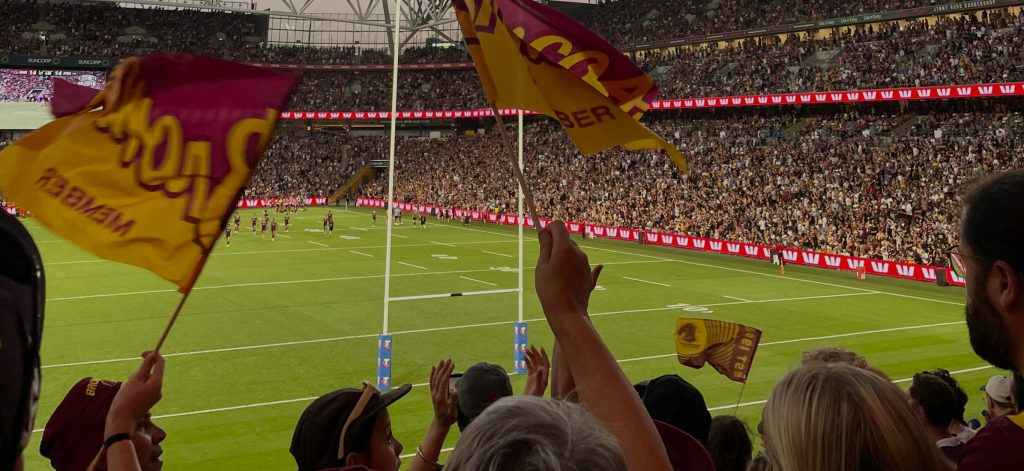
Did you know there are two kinds of rugby? Well, this is one of them, less popular and perhaps a bit simpler in its ruleset. It is primarily played in northern England and Australia, and it’s more the “working man’s” rugby. The two modern codes split off from each other just before the turn of the century, mostly because of a dispute over whether the sport should be amateur or professional. Rugby League went pro; Rugby Union remained amateur (until 1995, at least).
As for this version, I used to put it at the bottom, and it probably should be higher still in this list, but I just find it not very interesting. Mostly you just watch teams go back and forth with their six tackles, kicking the ball after their fifth tackle, and then it starts over again. Teams usually start in the same place, advance the same amount, and kick so the other team can start in the equal but opposite place. Yes, you do get some times where they can’t advance as far, leaving the other team to attack their goal line repeatedly. But scoring is difficult so they keep at it again and again—especially if you get one team that keeps having to do goal-line dropouts over and over again. It all gets repetitive after a while.
Now maybe if I grew up watching it, I’d feel different about it. (I’m sure people unfamiliar with baseball would say something similar.) But as such, I don’t like to watch it as much, though I will say I prefer the NRL to Super League. There are some minor rule changes that make NRL seem a bit better, though they’ve become a lot stricter on play-the-ball lately (at least from what I’ve seen). I can’t tell whether that’s a good thing or not.
6. Gaelic Football

This is also one I’ve not seen a lot of, as it is difficult to watch where I live. I did buy a subscription one year, but I found I didn’t watch much of it. That wasn’t all because of the game though: most of the matches were commentated in Irish Gaelic so it was a bit distracting. The game is still fun to watch though, for the most part, though I do have a few complaints.
One of them is that Gaelic Football is generally a no-contact sport. There’s no tackling or rough contact allowed, so dispossessing players of the ball usually requires waiting for an errant pass or for the player in possession to hold the ball too long without bouncing or kicking it. In addition, most scores occur at long distance when players kick the ball through the uprights for one point instead of kicking a goal for three. Last year they added a two-pointer rule that confused me when I happened to see a game recently, and I had to look it up because I didn’t remember that rule—with good reason, as it turned out.
There is a better version of this sport (in a way) which is not really a version of football, so it’s not on this list. But if I were to consider it, it would be considerably higher. Hurling is almost the same game—field and scoring and handling and most other rules are the same—except it’s played with a small, hard ball (the sliotar) that you hit with a stick called a hurley. It just works a lot better as a game, I think, but since I’m only looking at football for the list, I’ll leave off those considerations.
5. American Football / Gridiron Football / US Football
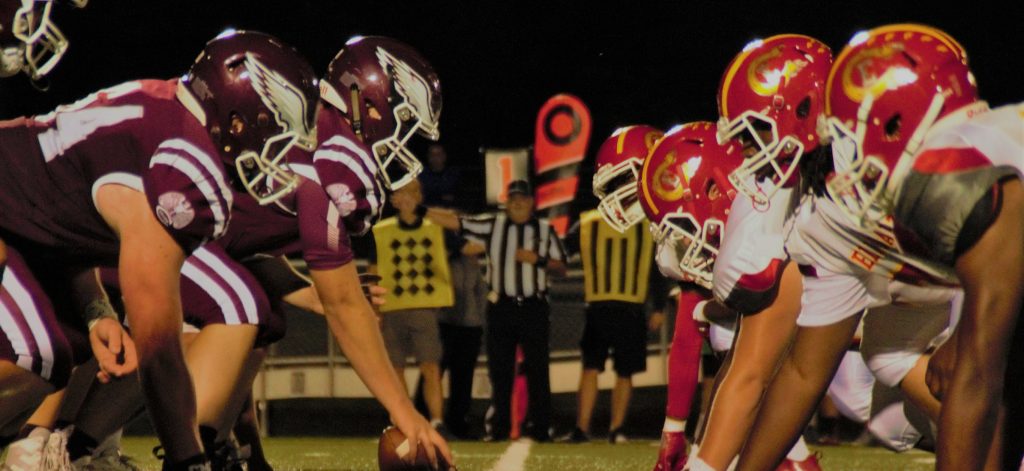
This is probably higher than it deserves, but I do think the rules work a bit better than the games below it on this list, but it’s still kind of a mess. Part of that is its name: there is no really good name for this sport. US fans just call it “football,” and though it has other names, those aren’t often used. But just know that this is the version of football played in the United States, both NFL and college football. Yes, there are slight differences in the rules between pro and amateur, but they are minuscule enough to be basically the same sport.
If soccer is the football that least uses hands, this is the football that least uses feet. Kicking is such a rare thing in this game simply because of the strict stipulations on when it can happen. Essentially, you can only kick the ball in the same circumstances as you can make a legal forward pass. If you happen to kick the ball any other time, you get flagged for an “illegal kick”—a term I find hilarious in a game descended from older traditions where kicking was much more important. Now, it wasn’t always so in US football. I can’t find the exact year, but I know that certain kicks that are illegal now were not so in the past.
I could go on about the kicking restrictions, but there are other oddities in this sport as well. For one, the goal posts are not on the goal line. They used to be, but they aren’t anymore. This looks incredibly silly compared to other kinds of football—especially other rugby-style games. Even Canadian football (higher on this list), which is similar in many ways, has goal posts (nearly identical in construction) still on the goal line. Add to this that the field is the smallest of all the footballs, and the rules have been so mangled by exceptions and clarifications that it’s a mess.
The new kickoff style (I don’t even know how to describe it) is a monstrosity of uncreative thought, spawned from a rules committee that refuses to consider other sports and how they manage to handle kickoffs and restarts just fine. I would certainly like to see them adopt a more rugby-style kickoff: ball kicked from midfield, can’t go out of bounds or out of the end zone. That would force kicks to be in the field of play, and it would encourage onside kicks—especially after penalties that move the spot forward.
One last thing (though there are others) doesn’t come up too often, but often enough to be annoying: the definition of “forward pass.” There are a few instances in recent memory where a player running down the field has passed the ball back to his teammate, who goes on to score or at least advance, only for the play to be called back for an “illegal forward pass”—not because the pass was not backwards, but because relative to the field, the release point was behind the point of the catch. This is not at all a problem in rugby, which considers the direction of the pass and the momentum of the runners. US football sorely lags behind its sister sports in this regard, and they need to change it. It wouldn’t be that hard either: the quarterback is considered to be throwing the ball “forwards” if his arm is going “forwards” at the time of release, even if the ball goes backwards. Why not make that the rule for everything? It makes sense to me, but it will probably take a controversial play to change it.
4. International Rules Football / Compromise Rules Football
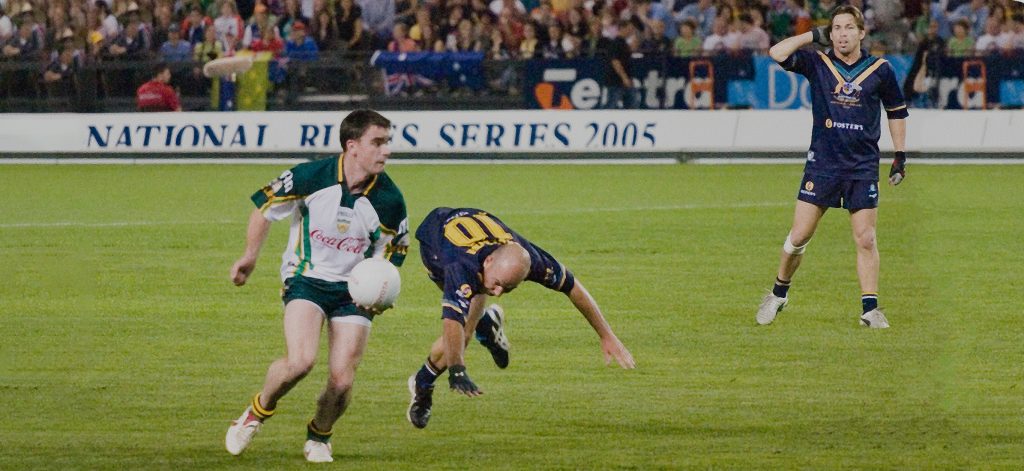
This one also could be higher on the list, but I think it needs a bit more work. It isn’t played very much and as such I don’t think all the bugs have been worked out. I think it is a great game as it is, and with a bit of work (and modification) I think it would make a great replacement for soccer. I know it never would happen, but it’s still a fond dream.
International Rules Football is a combination (of sorts) of Gaelic Football and Australian Rules Football. Basically, you play on a Gaelic Football field with Gaelic Football equipment (plus the “behind” posts) with Australian Rules Football rules (including tackling and “marks”). It has to be modified from both rule sets to limit the number of hand passes and make backward-kicks not able to be “marked,” but it’s a great game that is played (or used to be before a certain pandemic) about once a year between Australia and Ireland.
There’s not too much more to say about it, but I highly recommend you finding a video of a match. If you know Gaelic Football and Australian Rules Football, you’ll pick up on the rules soon enough.
3. Canadian Football
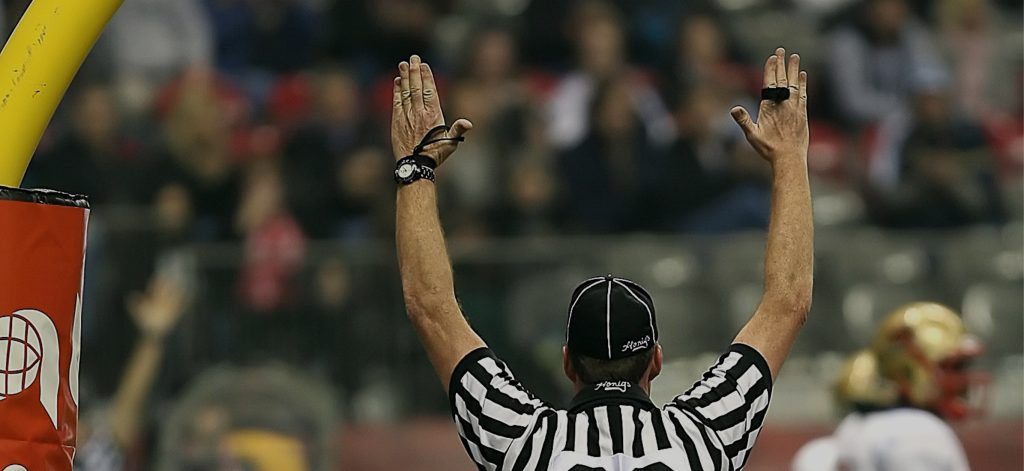
Canadian Football is quite similar to football in the US, but as far as rules go, I find it the superior game (and it actually has a name). For one thing, you can kick the ball in open play, and the rules are a lot like rugby: the kicker and those behind the ball can legally take possession of the ball while those offside on the kick must keep some distance away from the ball until the opposing team touches it (or an onside member of their team collects it). This makes for some interesting plays, where players can kick it back and forth to each other. I suppose the complexity of officiating such kicks is what makes them illegal under US rules.
There are three downs instead of four. They play with twelve players instead of eleven. The field is wider and longer, and the end zones are huge. All in all, it’s just a better game to watch, and I’d like to see the NFL adopt some of these rules to make that game better too.
As I get to the top of this list, I’m saying less and less about each sport because I’m generally commenting on the things I don’t like. There’s not too much to dislike from here on, so I’ll try to find something to comment on to highlight why I prefer one over the other.
2. Australian Rules Football / AFL
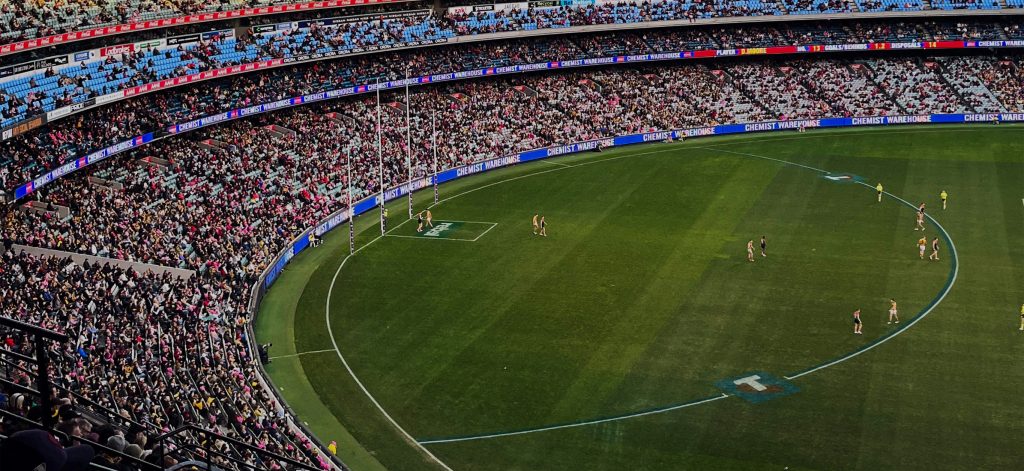
Australian Rules Football shares a lot of similarities with Gaelic Football, like how you have to “solo” the ball while running with it and how all hand passes must be made with a closed hand. It’s a rough sport played on a huge field, so large each team gets eighteen players. There are no goalkeepers because the goals are unique, stretching from the ground to infinity. Unlike Gaelic Football, you can tackle opponents who have the ball, and you can catch kicks that go a certain distance for a “mark”—a free kick you can take from behind the point where you caught it. It’s an exciting game to watch, and though it’s pretty much only played in Australia, it’s big there—and the stadiums they build reflect that. They’re enormous!
I highly recommend giving this one a look.
1. Rugby Union
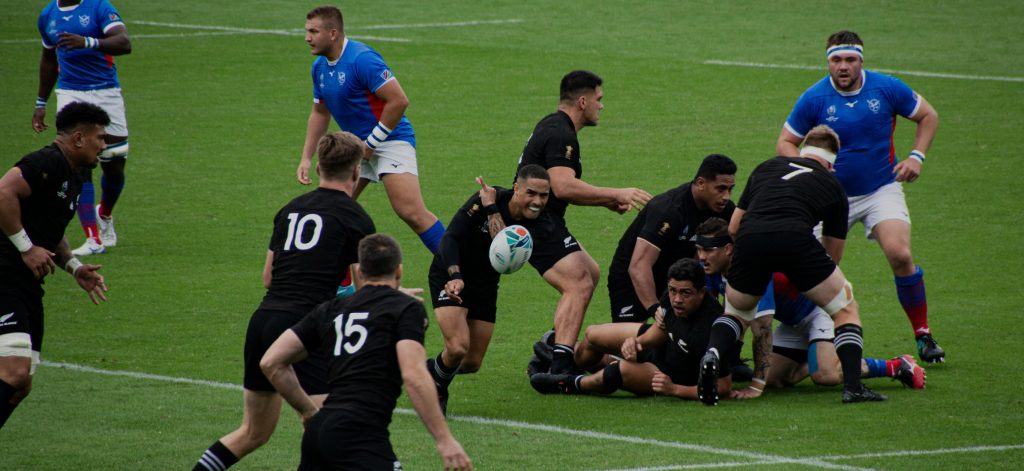
And now for the top one. This shouldn’t be a surprise. Rugby Union is the more popular code of rugby, and it’s played all over the world. When you casually hear about “rugby,” this is what is meant.
What can I say? Rugby might be as perfect as you can get. It combines everything that makes for good football, and it’s a well balanced game. Goals aren’t so valuable that no one goes for tries, and tries aren’t so valuable compared to goals that teams bypass them altogether. The different fixtures of the game—lineouts, scrums, rucks, mauls—are varied and interesting, and gameplay is well-structured, but the rules still leave room for a large amount of diversity in play. I know that’s a lot of adjectives, but I’m not quite sure how else to explain it. It’s just fun to watch.
If I have one critique, it’s the scrum. If you watch an old match, you’ll see scrums being nothing more than players coming together in formation and pushing against one another. These days, they are carefully choreographed but brutal, and they keep changing the rules concerning how they begin. I started watching in the “crouch, touch, pause, engage” era, but it has changed a bit since then. I think they’re trying to make them still competitive but less dangerous.
And the skill of the players and officials is unmatched, I think, in all of sport. It’s just such a well crafted game, and you’ll just have to check it out for yourself. It might take a while to learn all the rules, even if you watch a video that teaches them to you. You’ll just have to learn by watching, and that’s half the fun.

Comments